How the Last Clear Chance Doctrine Applies to Car Accidents
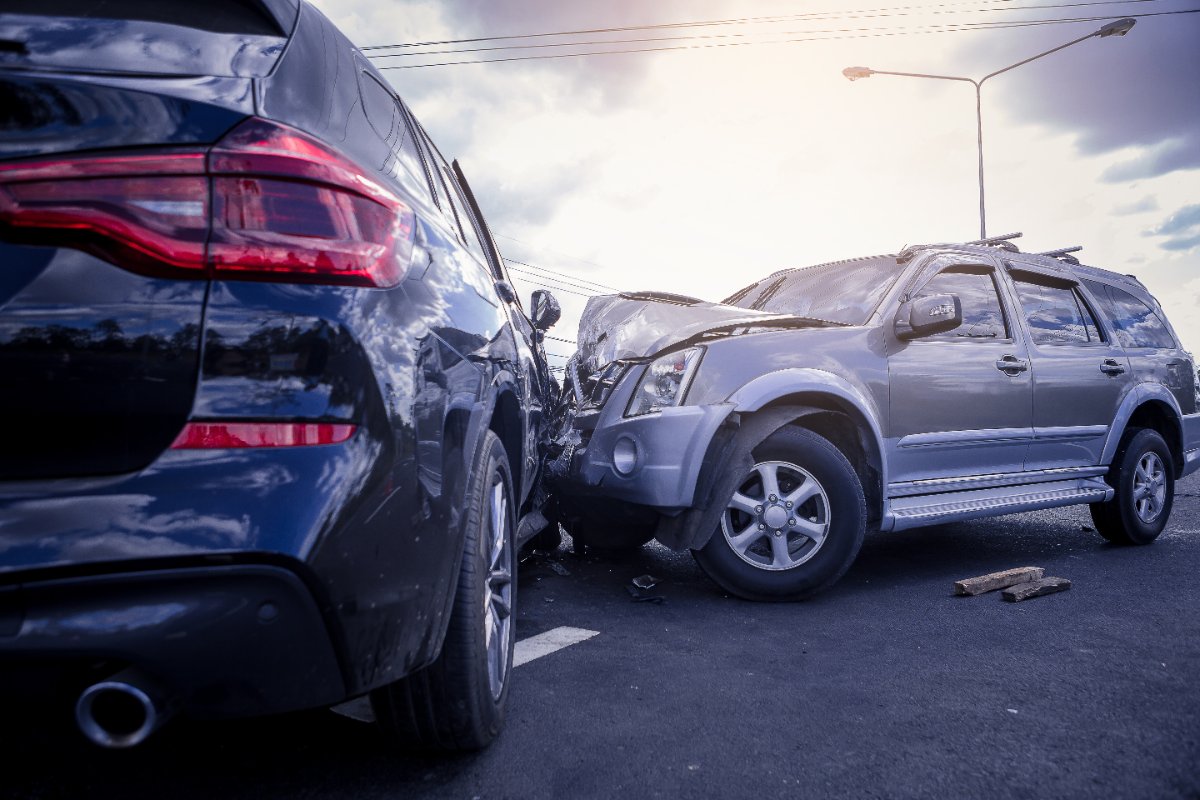 The last clear chance doctrine in Alabama can allow an injured person to overcome a contributory negligence defense if they can prove the required elements. In Alabama, if you are even one percent responsible for a car accident, your personal injury claim may be barred – unless you can show that a valid exception applies. The last clear chance doctrine is a valid exception if you can prove it.
Key considerations
- Contributory negligence means that your car accident claim will be barred if you are partially at fault for a car accident.
- You can use the last clear chance doctrine to defeat a contributory negligence defense if you can show that another driver knew you were in danger.
- You can show that the other driver had a clear opportunity to prevent the danger.
- You need the help of skilled Tuscaloosa car accident lawyers to show that you meet the requirements for asserting the last clear chance doctrine.
What is contributory negligence?
The 50 US states and the District of Columbia have different rules for determining what rights an accident victim who is partially at fault for a car accident (and other types of accidents) has.
The comparative negligence standard
In all but five locations (Alabama, Maryland, North Carolina, Virginia, and Washington, D.C.), comparative negligence is the standard. There are three varieties of comparative negligence:
- You can file even if you are 99 percent at fault.
- You can file if you’re 50% or less at fault (the ‘Modified’ 51% rule)
- You can file if you’re 49% or less at fault (the ‘Modified’ 50% rule)
In all three cases, your damages are reduced by your degree of fault.
The contributory negligence standard
In Alabama and a few other states, your personal injury claim or a wrongful death claim will be barred even if you are just one percent liable. The contributory negligence standard gives insurance companies and defense lawyers an advantage. If they can identify even a minor traffic violation or a brief error in judgment, you can lose your entire claim.
When can a victim assert the last clear chance doctrine?
There are some exceptions and limits to contributory negligence, including claims involving wanton or willful conduct. Alabama also treats children differently: children under seven are generally incapable of contributory negligence, while children between seven and 14 are presumed incapable unless the opposition successfully rebuts that presumption.
The last clear chance doctrine is another exception to the assertion by a defendant that you were contributorily negligent. You can argue that your claim should proceed, despite your partial fault, because the other driver knew you were in danger, that you couldn’t escape from that danger, and the other driver had the final chance to avoid the accident but failed to do so.
The specific parts of the last clear chance doctrine
To use the last clear chance doctrine to defeat a contributory negligence defense, you must show:
- That your car was in a position of peril. Peril (danger) means that your car and you were likely to be struck, forced off the road or into a barrier, or damaged in some other way. Peril, in the case of pedestrians and bicycle riders, means that the walker or rider was likely to be struck by a car.
- That you could not avoid the peril on your own. You cannot assert the last clear chance defense if, for example, you could avoid the peril by moving into another lane, applying your brakes, or taking some other action.
- The other driver was aware of the danger. You must show that the other driver actually knew you were in a dangerous situation. It is not enough to show they should have known; they must have had actual awareness of your peril in time to avoid the collision. For example, the other driver saw that you had entered an intersection improperly or saw that they were too close to your car.
Generally, you need to show what evasive action the defendant driver could have taken (such as slowing down or moving to an open lane) and that the driver failed to take that preventive action.
Who can assert the last clear chance doctrine when a car accident happens in Alabama?
The last clear chance applies to drivers, pedestrians, and bicycle riders. They can all assert the last clear chance rule if they meet the requirements.
How do your lawyers show that the last clear chance doctrine applies in my car accident case?
At Prince Glover Hayes, we review exactly how car accidents happen, why another driver was negligent, why you may be partially at fault, and if the last clear chance rule applies. We conduct this review by:
- Reviewing the police report and speaking with the police.
- Hiring investigators who investigate the accident site, speaking with witnesses, examining if there are any videos of the accident, and taking other steps to show what happened.
- Working with traffic reconstruction experts, when necessary, to show step by step and second by second how your car accident happened.
- Questioning the defendants and witnesses in person about where the other driver was coming from, what they were doing each step of the way, when they first saw you, and what they did when they saw you.
- Preparing visual evidence to show insurance companies and juries that a driver had a last clear chance to avoid the car accident.
You can help by:
- Calling the police when a car accident happens
- Taking photographs or videos of the accident site
Speak with our Alabama car accident lawyers today
Insurance companies and defense attorneys have a large incentive to argue that you were partially responsible for a car accident. There’s no room for error. If you were just a little at fault, you will lose your claim unless you can show that an exception, such as the last clear chance rule, applies.
At Prince Glover Hayes, we have the experience and working relationships to show precisely how your car accident happened. Call us or fill out our contact form to schedule a free consultation. We’re ready to fight for all the compensation you deserve. Prince Glover Hayes has an office located at 2311 University Boulevard, Suite A, Tuscaloosa, AL 35401.
Disclaimer: Prince Glover Hayes has an office in Tuscaloosa, Alabama, and handles car accident cases statewide. This article is an advertisement and is not intended as an offer of legal employment.